

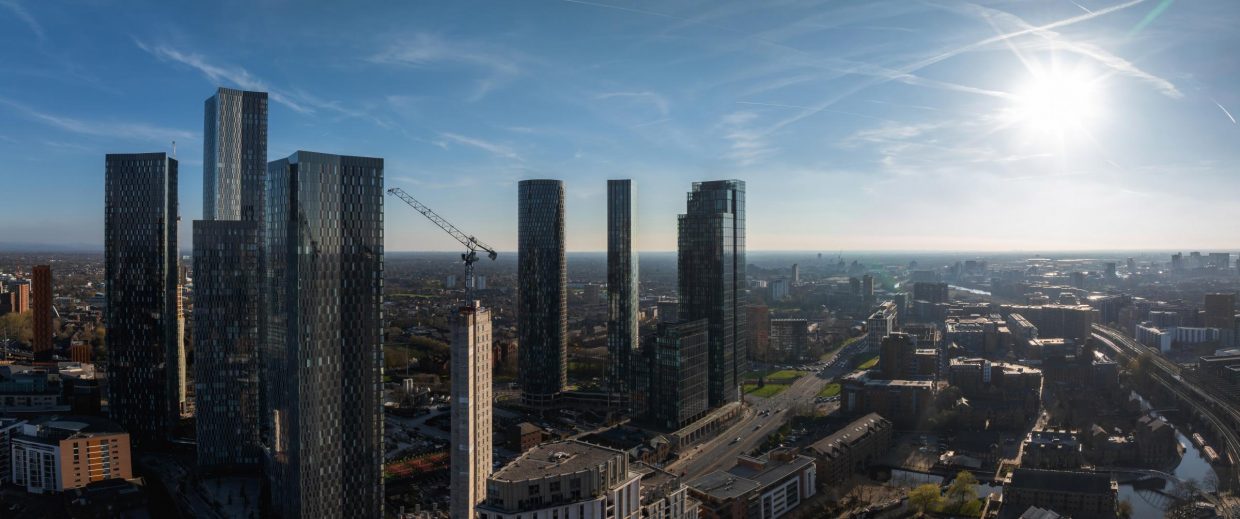
The 2026 crane survey publicised by Deloitte has sparked plenty of conversation across the Manchester property sector. For the first time in several years, the number of cranes has fallen – an unusual moment for a city that has consistently seen crane activity increase year on year.
However, the headline figure doesn’t tell the whole story. What it really reflects is a market that is adapting rather than retreating.
This was a key theme at the Tall Buildings Conference held in Manchester at the end of March. One of the most encouraging contributions came from the Building Safety Regulator, with Joshua Paulin acknowledging that while there were initial challenges following the introduction of the new regime, the situation is improving. Approval times are reducing, and the number of rejected applications is also beginning to fall.
Perhaps more importantly, the tone in the room felt collaborative. The conversation focused less on the difficulties and more on how the industry can align with, and support, the regulator. The shared view was clear: buildings must be safe first and foremost. The Building Safety Regulator ultimately wants to approve schemes at Gateway 2 wherever possible, provided the necessary information is in place.
At the same time, the market is evolving. Research from Knight Frank suggests that many investors and developers are increasingly pursuing mid-rise and low-rise build-to-rent schemes. This shift is being driven not only by the Building Safety Act, but also by rising construction costs and higher financing rates. Rather than stopping development, these factors are simply influencing the type of schemes coming forward.
And the fundamentals remain extremely strong. Manchester’s economy exceeded the £100bn mark for the first time in 2026, having grown by 28% since devolution in 2015 – a powerful indicator of the city’s long-term trajectory.
We are also seeing this first-hand at GIA. Over the past 12 months we have worked on a significant number of schemes across the city, and while regulatory change inevitably means projects are progressing more slowly than they once did, development activity remains strong and the pipeline continues to grow.
What is clear is that development is still very much a positive force for the city. As the market adjusts, there is an increasing need for early-stage advice and collaboration to help projects move forward smoothly. This includes everything from crane oversailing licences through to daylight and sunlight assessments, wind analysis and climate resilience support – all of which can play an important role in helping schemes progress from concept through to delivery.
Manchester has always shown an ability to adapt, and the current moment is no different. The cranes may be fewer in number this year, but the ambition, investment and long-term confidence in the city remain firmly in place.
To discuss your development plans in the North West and how we can help, please reach out to Michael Beatty or Edward Portlock.